HP Palm Smartphones
  • Client: Hewlett Packard Palm
  • When: 2010-2011
  • Team: 4 Mechanical Product Design Engineers, Electrical Engineer, and external Contract Manufacturing team
  • My Role: Product Design Engineer
Overview

Hewlett Packard acquired Palm soon after I joined in the summer of 2010. During my time at HP Palm, I was a member of the team that shipped the Palm Pre 2 and Palm Pre 3 phones. I learned and experienced a lot in my first year out of Stanford!

Products

During my year and a half at Palm, I worked on the design of about ten smartphones. Some were products I jumped onto during the later stages of the development process and most were early concepts that we took through various stages of the development cycle.

Palm Pre 2 (shipped)
Palm Pre 3 (shipped)
Windsor Not (never released)
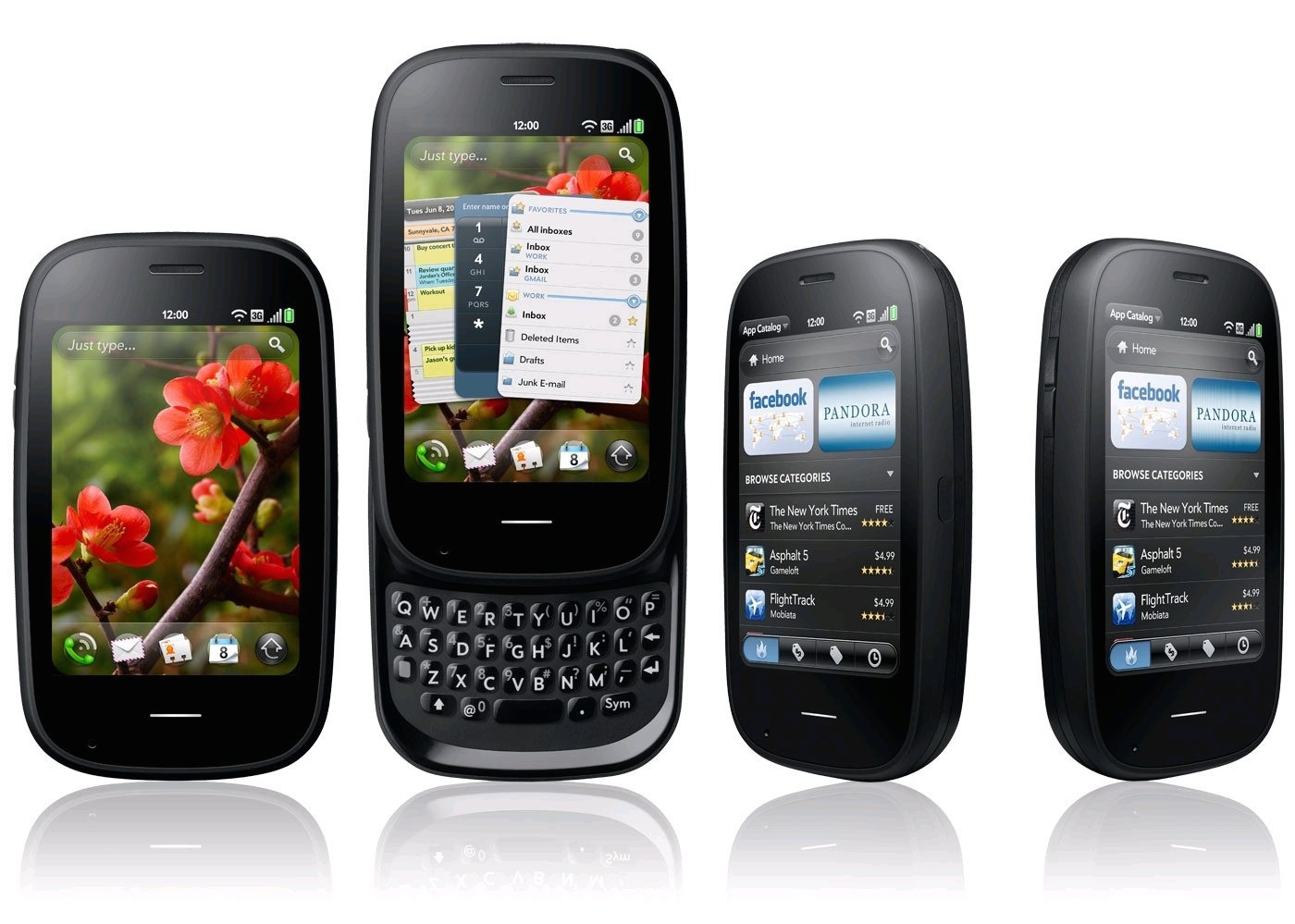
HP Palm Smartphones: Palm Pre 2 and Palm Pre 3

Product Design

As a HP Palm Product Designer, I put my Product Design and Mechatronics degrees to good use. With teams of three to four Product Designers, we designed and developed entire smartphones from concept to shipping. Along with designing the overall system architecture and the detailed mechanical part design, I coordinated with and negotiated between various internal Palm Engineering, Marketing, and Industrial Design teams and external ODMs, vendors, and suppliers. During the product development process, I regularly analyzed and developed solutions for reliability and manufacturing failures.

Design Strategy and Research

While working on product development, I explored and prototyped concepts for future devices and physical interactions and experiences. I used market research and competitive analysis to inform my initial design directions. For instance, I primarily focused on what a dual screen experience might be as well as what a biometric (fingerprint sensor) experience could look like.

During this research, I realized that there was a huge need in the market for a candy-bar smartphone with a streamlined OS and what better system than webOS. In our downtime, my colleague and I began designing the concept for a new keyboardless phone. We pitched it to our team lead, manager, and within weeks our grassroots design gained traction from all over the company. Soon, our design was not only a product on the roadmap, but also the flagship product that had drummed up support, excitement, and hope from throughout the organization. We proceeded to develop our design through nearly the final stages of development. Though our product was canceled, I am extremely proud to have been a part of that experience.

Microsoft Research Asia Enterprise Social Networking Platform
  • Client: Microsoft Research Asia
  • When: 2009
  • Team: Research team of 2 Psychologists and 2 User Experience Designers and Researchers
  • My Role: User Experience Designer and Researcher
Overview

In the Summer of 2009, I moved to Beijing, China to work for Microsoft Research Asia (MSRA) as a User Experience Design Researcher. I worked on a team of two Psychologists and two User Experience Designers/Researchers.

My time at MSRA was divided into two primary projects: Cross-Cultural Design Research and designing an Enterprise Social Networking Platform.

Cross-Cultural Design Research

With our design research, we strove to understand how to design better digital experiences for a Chinese audience. Using qualitative and quantitative research methodologies and usability studies, we honed in on elements that resonated with our target audience. Specifically, we conducted market research and competitive analysis, surveys, interviews, A/B testing, card sorting, walkthroughs, task analysis, facilitated brainstorming, and participatory design.

We conducted much of our research with our Enterprise Social Networking Platform, the Twinkle Project, which in turn informed our design choices and directed our next iterations.

Enterprise Social Networking Platform

Social networks are a fantastic way to generate and share knowledge among large groups of people. Social software has the potential to build and maintain strong communication and collaboration channels. Yet, why do enterprise social software solutions still leave something to be desired?

There is a huge opportunity to apply social software within the Enterprise. The Twinkle Project explores exactly that. Could we redesign and reinvigorate Social Enterprise Software? How can we enable users to connect, collaborate, share content, knowledge, and expertise, manage information, and increase productivity across an enterprise?

As a designer for Twinkle, I was responsible for design research and strategy and UX and UI design.

A blurb about our work on Twinkle was featured in the 10 Year Anniversary MSRA Book (pg. 28).

BMW Head Up Display and Console
  • Client: BMW Research and Technology
  • When: 2008
  • Team: Research team of Psychologists, User Experience Designers and Researchers, Developers
  • My Role: User Experience Designer and Researcher
Overview

Summer 2009, I moved to Munich, Germany to work as a User Experience Design Researcher at BMW Forschung und Technik (BMW Research and Technology). Our ConnectedDrive team was comprised of a diverse group of Computer Scientists, Psychologists, and Designers.

During my time at BMW, I was responsible for Cross-Cultural Design Research and the Design and Research for the Head Up Display, Dashboard, and Center Console On-Board Computer.

BMW Head Up Display HUD Design

Cross-Cultural Design Research

Our goal was to understand how aging societies and growing city size might affect our automotive infotainment design both within Germany and abroad. I researched and analyzed demographic data on aging societies, megacities, and their implication on the automobile and drivers. I also researched the latest findings on augmented reality and how we could apply them to the driver experience.

As the sole Design Strategist, I led the team through Design Thinking workshops and facilitated brainstorming sessions.

Head Up Display, Dashboard, and Center Console

Using our cross-cultural design research as a foundation, we designed innovative interactions, UX, and UI for the Head Up Display, Dashboard, and Cluster Instrument Panel (entertainment and driver assistance functionalities). By conducting quantitative research and usability studies, our designs iteratively improved to achieve our priorities. Specifically, we conducted market research and competitive analysis, card sorting, walkthroughs, task analysis, and eye-tracking with 360 degree dynamic and static driving simulators.

Publications

Our user experience design research on Point of Interest selection was published and presented at the First International Conference on Automotive User Interfaces and Interactive Vehicular Applications (AutomotiveUI 2009) Sep 21-22 2009 in Essen, Germany.

BMW Toggle Strategies for Points of Interest

Toggle Strategies for Point of Interest selection via the iDrive controller

Abstract: The importance of spatial and geo-based information has increased over the last few years. The most prevalent example of this kind of information is points of interest (POI) like hotels, restaurants, gas stations, etc. As cars are made for individual transportation, interacting with geo-based information via the In-vehicle Information System (IVIS) should be possible. At present, state-of-the-art IVIS only permit a list based or center based selection on the map, which makes it difficult to handle a high closeness of geo-based data. In this paper, we present alternative approaches for selecting geo-based data with a multifunctional controller. In our work, visual cues help users predict the selection order. An explorative user study showed potential advantages of our concepts.